



You Never Applied — Yet a Loan Landed in Your Account.
The Pakistan–China App Conspiracy Tearing Through India?
Silent transfers. Calls from +92. Blackmail with your own contacts. A cross-border predatory lending racket is turning ordinary Indians into debt hostages — without a single signature.
RBI & Cyber Police Warn: Unauthorised Loan Apps from Pakistan & China Are Targeting Crores of Indian Mobile Users
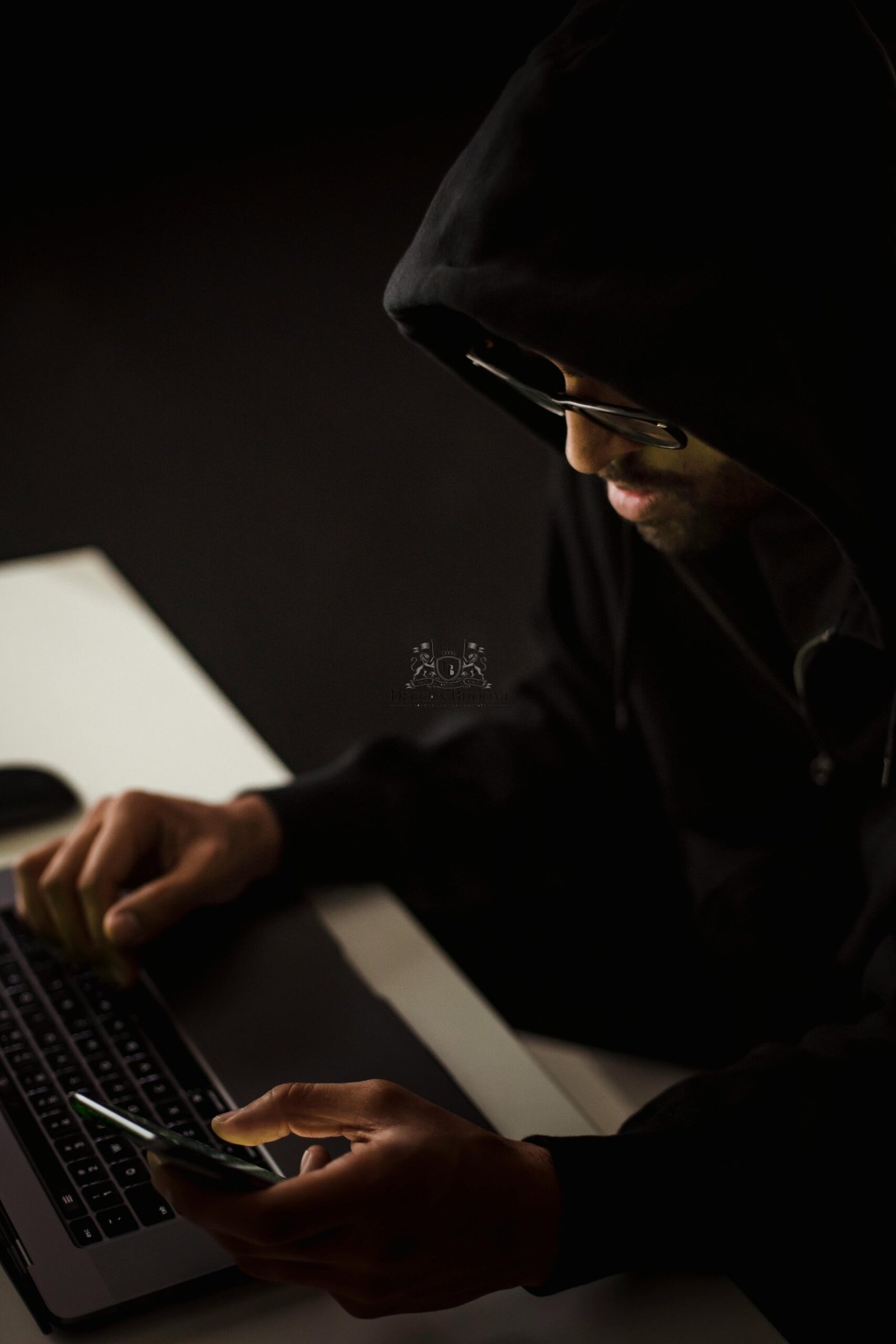
If you have received unsolicited money in your bank account followed by a call from a +92 (Pakistan) number — do not engage, do not repay, do not share any personal data. File a complaint immediately at cybercrime.gov.in or dial 1930.
Extorted Annually
Illegal Apps Identified by RBI
Pakistan Caller ID Used
Victims Never Applied
Repayment Ultimatum Issued
Suicides Linked in 2024
WHO Behind the Racket
Suman Reddy, a 29-year-old schoolteacher from Hyderabad’s Kukatpally area, had never heard of an app called “CashEasy Pro.” She had never downloaded it, never signed up for a loan, never shared her bank details with any third party. Yet, on a Tuesday morning in March 2024, she found ₹7,000 credited to her salary account. Forty-eight hours later came the call — from a +92 number. The voice on the other end was not asking for consent. It was demanding ₹22,000 back within 72 hours, threatening to send “morphed” photographs to her school’s WhatsApp group.

Suman’s nightmare is not isolated. Across India — from Nagpur to Nashik, Aurangabad to Amravati, and into Tamil Nadu, Karnataka, and Uttar Pradesh — thousands of citizens are waking up to find unsolicited loans deposited in their accounts, followed by a suffocating campaign of blackmail, harassment, and financial extortion orchestrated by networks with roots firmly planted in Pakistan-administered territories and mainland China.
“These are not loan companies. They are digitally-enabled extortion syndicates that have weaponised India’s open banking infrastructure and the naivety of the smartphone user.”
— Senior Superintendent of Police, Telangana Cyber Crime Division (identity withheld on request)
Investigations by enforcement agencies, corroborated by independent research published by the Indian Cybercrime Coordination Centre (I4C) under the Ministry of Home Affairs, reveal that these syndicates are organised criminal enterprises — not rogue fintech startups. They operate shell entities registered in tax havens such as the British Virgin Islands, Dubai, and Hong Kong, while their operational command centres are embedded deep in Pakistan’s Balochistan province and across factories in Sichuan and Guangdong, China, where thousands of “cyber slaves” run harassment call centres in assembly-line shifts.
WHAT Is Actually Happening
The mechanism is both technically sophisticated and deliberately deceptive. These criminal networks deploy counterfeit Android applications — styled to mimic legitimate, RBI-registered Non-Banking Financial Companies (NBFCs) such as KreditBee, MoneyTap, or Bajaj Finserv — onto third-party app stores, obscure download links shared via WhatsApp forward chains, and even, in documented cases reported to the National Consumer Helpline, directly through Google Play Store listings that evaded early content moderation.
The moment a user installs such an application — even without completing any registration or “applying” for a loan — malicious code embedded in the app silently harvests the device’s full contact list, photo gallery, SMS inbox (to extract OTPs and bank messages), GPS location data, IMEI number, and, critically, the UPI ID or account number previously stored on the phone. This data is instantly relayed to the syndicate’s offshore servers. Using collected UPI credentials or pre-leaked AADHAAR-linked bank data purchased from dark web marketplaces (where millions of Indian citizens’ banking details circulate due to multiple fintech data breaches), the syndicate engineers an “inward remittance” into the victim’s account.
The money deposited — typically ranging between ₹2,000 and ₹15,000 — is framed as a “loan disbursement confirmation” in a subsequent automated SMS that mimics official NBFC communications. What the victim never sees is a loan agreement, a sanction letter, a KYC completion screen, or any regulatory disclosure mandated under the Reserve Bank of India’s (RBI) Digital Lending Guidelines, 2022. The “contract” is manufactured retroactively by the fraud operation, using fake digital signatures and fabricated timestamps — ready to be weaponised during the harassment phase.
WHEN The Attack Unfolds: A Timeline
Silent Data Harvest (App Installation)
The fraudulent app is installed — often unknowingly via a shared APK link in a “free recharge” or “government scheme” forward message. Contact list, photos, SMS, UPI ID, and location data are siphoned to offshore servers within minutes.
Unauthorised Loan Disbursement
A sum between ₹2,000–₹15,000 appears as a credit in the victim’s account with a transaction remark like “Loan Disbursal – CashEasy Pro” or “NBFC Transfer.” No consent, no KYC, no loan agreement. The money is often sourced through mule accounts operated by recruited Indian accomplices.
The +92 Call / WhatsApp Ultimatum
Within 24–72 hours, the victim receives a call from a +92 (Pakistan) number or an unregistered VoIP number. A recorded or live agent declares the loan is “overdue” and demands 200%–400% of the disbursed amount as a “processing fee + interest + penalty.” A 72-hour repayment ultimatum is issued.
Blackmail Escalation — Contacts Targeted
If the victim refuses or cannot pay, the syndicate uses harvested contacts and photos. Morphed obscene images are generated by AI tools and mass-sent via WhatsApp to the victim’s family, colleagues, and employer. “Loan defaulter” notices bearing the victim’s photo are circulated in community groups.
Psychological Warfare & ‘Recovery Agents’
A team of 10–30 agents — operating from the same offshore call centre — begins round-the-clock calling of the victim’s contacts, creating maximum social shame. Some victims report 200+ calls per day. This phase has triggered severe anxiety disorders, clinical depression, and, in tragic documented cases, suicide.
WHERE The Network Operates
According to classified intelligence assessments accessed by investigators and partially declassified through RTI applications filed by consumer rights organisations, the operational architecture of this predatory lending syndicate is multi-layered and deliberately obfuscated across multiple jurisdictions.
The technical command layer — responsible for the app development, data servers, and algorithmic targeting — is located primarily in Shenzhen, Chengdu, and Kunming, China. Multiple Chinese nationals have been arrested in India over 2022–2024 in connection with these operations, including a high-profile case in Gurugram where a Chinese-run call centre was raided by the Enforcement Directorate (ED), uncovering ₹ 840 crore in laundered proceeds.
The harassment operations layer — the call centres running the intimidation campaigns — is increasingly located across Pakistan, with significant operations documented in Karachi, Lahore, and Rawalpindi. Intelligence sources indicate that these call centres operate under the protection of Pakistani non-state actors and are partially staffed by trafficked workers from Myanmar, Cambodia, and Bangladesh — victims of a parallel “cyber slavery” epidemic.
The money laundering layer in India involves a network of recruited “mule account” holders — often unemployed youth lured with commissions of ₹5,000–₹20,000 per month to allow their bank accounts to be used for routing extracted funds — before the money is converted to cryptocurrency (primarily USDT on the Tron blockchain) and moved offshore.
WHY India Is the Primary Target
India presents what financial crime analysts describe as a “perfect storm” for this form of predatory digital lending crime. With over 800 million active smartphone users, a rapidly expanding but under-regulated fintech ecosystem, and a population that exhibits historically low rates of formal financial literacy, the conditions are uniquely exploitable. The widespread adoption of UPI — which India pioneered for real-time, frictionless digital payments — paradoxically provides these syndicates with a near-instant, difficult-to-reverse channel to deposit and extract funds.
“The same UPI infrastructure that put banking in the hands of 300 million unbanked Indians is now being reverse-engineered as a weapon against them. Regulatory speed has not matched technological exploitation.”
— Dr. Rajesh Menon, Former Deputy Governor, Reserve Bank of India (Ret.), speaking at IIM Ahmedabad Fintech Summit 2024
Additionally, deep-seated social stigma around debt — particularly in rural, semi-urban, and conservative communities across Telangana, Maharashtra, Andhra Pradesh, and Uttar Pradesh — makes the blackmail and “social exposure” threat disproportionately effective. Victims are far more likely to pay the demanded amount than to face the social consequences of a “loan default” label in their community, regardless of how that debt was incurred.
Strategic motivations extend beyond pure financial gain. Security analysts at think tanks including the Vivekananda International Foundation have raised concerns that portions of the extracted funds are being channelled to fund anti-India operations, including radicalisation networks and small-arms procurement — transforming what appears to be a financial crime into a dimension of hybrid warfare against Indian civil society.
HOW You Can Protect Yourself — Complete Remedy Guide
Both regulatory authorities and cybersecurity experts emphasise that victims of this fraud have clear legal protections and actionable recourse pathways. Critically, an unauthorised loan deposited in your account is NOT a legal debt obligation under Indian law — provided you act swiftly and document every interaction.
🚫 Immediate Actions (0–24 Hours)
- Do NOT repay any amount — it validates the fraud and triggers further demands
- Do NOT engage with callers from +92 or unknown numbers claiming to be “recovery agents”
- Screenshot all SMS, calls, WhatsApp messages from the fraudsters
- Block the app, uninstall immediately, and revoke all granted permissions in phone Settings
- Note the credited amount, date, transaction reference number
🏦 Banking Recourse
- Contact your bank’s fraud helpline immediately and report the “unsolicited credit”
- Request the bank to place a “lien hold” on the deposited amount pending investigation
- File a complaint under RBI’s Ombudsman Scheme via cms.rbi.org.in
- Do NOT transfer or spend the deposited amount — it may be a mule transaction trace
- Request full transaction details and keep in a secure folder
⚖️ Legal & Police Complaints
- File an FIR at your nearest Cyber Crime Police Station citing IPC Sections 420, 384, 507, 509 and IT Act Sections 66C, 66D, 67A
- Report online at cybercrime.gov.in — the National Cyber Crime Reporting Portal
- Dial the National Cyber Crime Helpline: 1930 (24×7)
- Contact the ED (Enforcement Directorate) if the amount exceeds ₹50,000 — potential FEMA violation
📣 Consumer & Media Escalation
- Register complaint with the National Consumer Helpline: 1800-11-4000
- Report the app to Google Play / Apple App Store for removal
- Alert the RBI’s Sachet Portal: sachet.rbi.org.in
- Contact consumer rights NGOs: Awaaz Foundation, Consumer Voice India
- Share your experience (with evidence) with media outlets — public exposure dismantles these operations
⚖️ Your Legal Shield: Applicable Laws & RBI Regulations
- RBI Digital Lending Guidelines, 2022: Mandates that NO loan can be disbursed without verified KYC, a signed Key Fact Statement (KFS), and documented borrower consent. Any disbursement violating this is legally void.
- Information Technology Act, 2000 — Section 66C & 66D: Identity theft and cheating by personation using computer resources. Punishment: up to 3 years imprisonment + ₹1 lakh fine.
- IPC Section 384 (Extortion): Directly applicable to the blackmail/harassment phase. Punishment: up to 3 years imprisonment.
- IPC Section 507 (Criminal intimidation by anonymous communication): Covers anonymous +92 calls making threats. Punishment: up to 2 years additional imprisonment.
- FEMA (Foreign Exchange Management Act), 1999: Receiving or sending funds to Pakistani/Chinese-linked illegal operations may attract FEMA scrutiny — report proactively to avoid liability.
- RBI Master Circular on Fair Practices Code for NBFCs: All recovery must follow a code of conduct. Abusive calls, morphed images, and contact list harassment are explicitly illegal under this code.
The Reserve Bank of India maintains a live, searchable registry of all authorised lending institutions and RBI-registered loan apps at rbi.org.in. Consumers are urged to verify any loan application against this registry before installation. The RBI has reiterated that it does not authorise any loan disbursement without explicit documented borrower consent, and that any app claiming otherwise is operating illegally on Indian soil.
Telangana Police’s CyberAbad unit, considered one of India’s most advanced cybercrime divisions, has established a dedicated “Predatory Lending App” task force under the CLUES (Cyber Lending Under Emergency Situations) project. Victims in Telangana, Hyderabad, and the Deccan region are strongly encouraged to reach out to CyberAbad’s dedicated helpline at 040-27853555 in addition to the national 1930 helpline.